Table of Contents
ToggleThis Nintendo 64 guide covers everything collectors and retro gaming fans need to know about one of the most beloved consoles ever made. Released in 1996, the N64 brought 3D gaming into living rooms worldwide and created memories that still resonate today. Whether someone is rediscovering their childhood console or picking one up for the first time, this guide breaks down the history, hardware, best games, and buying tips for the Nintendo 64. From understanding what made the system special to building a solid game collection, readers will find practical information to get the most out of this classic machine.
Key Takeaways
- The Nintendo 64 sold nearly 33 million units worldwide and pioneered 3D gaming, the analog stick, and four-player multiplayer without extra hardware.
- Essential N64 accessories include the Controller Pak for saves, Rumble Pak for force feedback, and Expansion Pak for games like Majora’s Mask and Perfect Dark.
- Must-play games for any Nintendo 64 collection include Super Mario 64, Ocarina of Time, GoldenEye 007, and Mario Kart 64.
- A working N64 console with one controller typically costs $60–100 in 2025, with translucent Funtastic editions commanding higher prices.
- Clean cartridge contacts with isopropyl alcohol to fix most reading issues and replace worn analog sticks to keep controllers responsive.
- Use S-Video cables or HDMI adapters like RetroTink to get sharper visuals when playing your Nintendo 64 on modern TVs.
A Brief History Of The Nintendo 64
Nintendo released the Nintendo 64 in Japan on June 23, 1996. North America received the console on September 29, 1996, with Europe following in March 1997. The name “64” referred to the system’s 64-bit processor, which was a major leap from the 16-bit Super Nintendo.
The N64 launched with just two games in North America: Super Mario 64 and Pilotwings 64. Super Mario 64 alone sold millions of units and showed players what 3D platforming could become. This launch title remains one of the most influential games in history.
Nintendo chose cartridges over CDs for the Nintendo 64. This decision had trade-offs. Cartridges loaded games instantly and were harder to pirate. But, they cost more to produce and held less data than CDs. Many third-party developers moved to Sony’s PlayStation because of these limitations.
Even though the competition, the Nintendo 64 sold approximately 32.93 million units worldwide. The console introduced the analog stick to a mainstream audience and pioneered four-player gaming without additional hardware. Games like GoldenEye 007 and Mario Kart 64 turned living rooms into multiplayer arenas.
Nintendo discontinued the N64 in 2002, but its legacy continues. The console defined a generation of gamers and established franchises that remain popular today.
Essential Hardware And Accessories
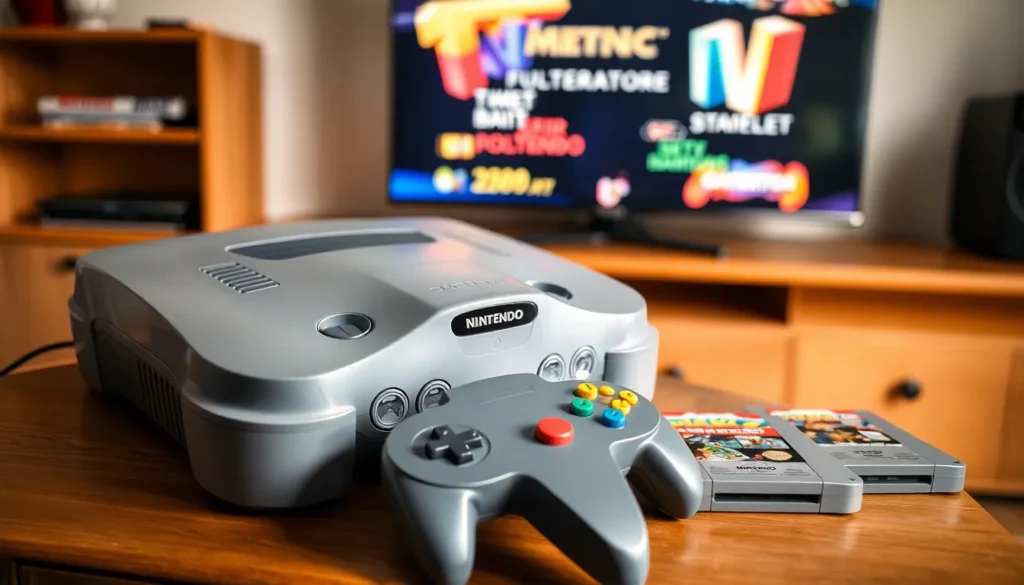
Anyone using this Nintendo 64 guide should understand the core hardware. The base console includes the main unit, one controller, AV cables, and a power adapter. The standard controller features an analog stick, D-pad, A and B buttons, four C buttons, L and R shoulder buttons, and a Z trigger underneath.
Controllers
The N64 controller has a unique three-pronged design. Players hold different sections depending on the game. Most titles use the center and right prongs for analog stick control. The controller port on the bottom accepts accessories like the Controller Pak and Rumble Pak.
Memory And Storage
The Controller Pak provides external memory for saving game data. Some games save directly to the cartridge, while others require this accessory. A single Controller Pak holds 123 pages of memory, which fills up quickly with multiple games.
The Rumble Pak adds force feedback to compatible games. It requires two AAA batteries and fits into the controller’s accessory port. Star Fox 64 was the first game to support this feature.
Expansion Pak
The Expansion Pak increases the N64’s RAM from 4MB to 8MB. Some games require it, including Donkey Kong 64, The Legend of Zelda: Majora’s Mask, and Perfect Dark’s single-player campaign. Other games use the Expansion Pak for improved graphics or higher resolution.
Video Output
The standard N64 outputs composite video, which looks blurry on modern TVs. Collectors often upgrade to S-Video cables or use third-party HDMI adapters for sharper images. The RetroTink and similar upscalers have become popular solutions for displaying the Nintendo 64 on modern displays.
Must-Play Games For Your Collection
No Nintendo 64 guide would be complete without game recommendations. The N64 library contains roughly 388 titles in North America. These games represent the essential experiences every collector should consider.
Platformers
Super Mario 64 remains the gold standard for 3D platformers. It sold over 11 million copies and changed game design forever. Banjo-Kazooie and its sequel Banjo-Tooie offer similar gameplay with charming characters and excellent level design. Donkey Kong 64 provides a massive adventure, though it requires the Expansion Pak.
Action And Adventure
The Legend of Zelda: Ocarina of Time frequently appears on “greatest games of all time” lists. Its sequel, Majora’s Mask, offers a darker story with unique time-loop mechanics. Both games showcase what the Nintendo 64 could achieve.
GoldenEye 007 set the template for console first-person shooters. Its multiplayer mode kept friend groups occupied for years. Perfect Dark expanded on that formula with more weapons and modes.
Multiplayer Essentials
Mario Kart 64 delivers racing fun for up to four players. The battle mode alone justifies owning this cartridge. Super Smash Bros. introduced the crossover fighting franchise that continues today. Mario Party and its sequels offer board game chaos with mini-games.
Sports And Racing
Wave Race 64 features impressive water physics that hold up surprisingly well. F-Zero X delivers fast-paced racing with a killer soundtrack. For wrestling fans, WWF No Mercy is widely considered the best wrestling game ever made.
Hidden Gems
Mischief Makers offers 2D action with creative boss fights. Blast Corps tasks players with destroying buildings to clear paths. Paper Mario combines RPG mechanics with the Mario universe in a charming package.
Tips For Buying And Maintaining Your N64
This Nintendo 64 guide includes practical advice for buyers and owners. The retro gaming market has grown significantly, so knowing what to look for matters.
Where To Buy
Local game stores often test their inventory before selling. This provides some assurance that the hardware works. Online marketplaces like eBay offer wider selection but carry more risk. Facebook Marketplace and garage sales sometimes yield great deals from sellers who don’t know current prices.
What To Check
Test the console before buying when possible. Bring a game and controller to verify everything works. Check the cartridge slot for bent pins. Examine the controller’s analog stick, loose sticks indicate heavy use. The stick can be replaced, but factor that cost into the purchase.
For cartridges, inspect the label for damage and check the contacts for corrosion. Open the cartridge if possible to verify it’s authentic. Reproduction cartridges flood the market, especially for expensive titles.
Price Expectations
A working N64 console with one controller typically costs $60-100 in 2025. Prices vary by condition and color variant. The Funtastic series (translucent colored consoles) commands premium prices. Popular games like Ocarina of Time cost $30-50 loose, while complete-in-box copies sell for much more.
Maintenance Tips
Clean cartridge contacts with isopropyl alcohol and a cotton swab. This fixes most “won’t read” issues. Blow into cartridges if you must, but cleaning works better. Store games vertically to prevent label damage.
The analog stick wears down with use. Replacement sticks or entire controllers solve this problem. Some players prefer third-party options with modern components.
Keep the console in a cool, dry place. Dust the vents occasionally. The N64 runs hot, so ensure adequate airflow during use.